731 St Mary’s Rd

Winnipeg, MB R2M 3N5

204-257-2822

or Text 1-833-492-8221

info@divercityscuba.ca

Courses

Peak Performance Buoyancy

Peak Performance Buoyancy

What is neutral buoyancy? SCUBA divers like to be neutrally buoyant so they neither sink nor float. It can be a tricky thing. Divers who’ve mastered the highest performance levels in buoyancy stand apart. You’ve seen them underwater. They glide effortlessly, use less air and ascend, descend or hover, almost as if by thought. They interact gently with aquatic life and affect their surroundings minimally.

What You Learn

  • How to trim your SCUBA gear so you’re perfectly balanced in the water
  • Nuances in determining weight so you’re not too light nor too heavy by even a slight degree
  • How to streamline to save air and move smoothly through the water
  • How to hover effortlessly in both a vertical position and a horizontal position

Contact Us For More Information!

Start Your eLearning Today!

Night Diver

Night Diver

As the sun sets, you don your dive gear, slip on your scuba mask and bite down on your dive regulator. A deep breath and you step off the boat – into the underwater night. Although you’ve seen this reef many times before, this time you drop into a whole new world and watch it come to life under the glow of your dive light.

What You Learn

  • Night dive planning, organization, procedures, techniques and potential problems
  • How to control your buoyancy at night
  • Entries, exits and underwater navigation at night
  • Nocturnal aquatic life, since many of the plants and animals you’ll see are different

Contact Us For More Information!

Start Your eLearning Today!

Ice Diver

Ice Diver

If extreme, unusual and challenging scuba diving scenarios appeal to you, try diving under the ice. Ice diving is one of the most adventurous scuba specialties because you confront conditions and see beauty few others ever experience. Plus, you might get a chance to play with your exhaled bubbles on the bottom of the ice. Flash your PADI Ice Diver certification card to get instant respect, and usually a lot of questions from other divers about what it’s like under the ice.

What You Learn

Teamwork is essential for ice diving so, during one classroom session, you’ll start by learning the roles and responsibilities of support personnel, tenders and safety divers. You also discuss types of ice, site selection and preparation, the effects of cold, emergency procedures and handling equipment issues. During three closely supervised ice dives, you’ll practice:

  • Using specialized ice diving equipment and safety lines.
  • Signals and communications along with line tending and line-securing techniques.
  • Handling problems and safety diver procedures.

You need to be a PADI Advanced Open Water Diver who is at least 18 years old to enroll in the Ice Diver course.

Contact Us For More Information!

Equipment Repair Specialist

Equipment Repair Specialist

Don’t miss a dive due to a SCUBA gear issue. Whether it’s a blown o-ring, regulator problem, wetsuit tear or a broken fin strap, you can learn how to manage basic SCUBA equipment adjustments. As a PADI Equipment Specialist, you are prepared for the basic SCUBA equipment maintenance, care and adjustments you’ll encounter every day. In addition, you’ll learn interesting background information about how your gear works, how it’s repaired and other information that helps you with your equipment investment.

What You Learn

  • Review the theory, principles and operation of SCUBA diving equipment
  • Learn about routine, recommended care and maintenance procedures, and equipment storage
  • How to overcome common problems with equipment and recommended professional maintenance procedures (may include a demonstration of repair procedures)
  • Gain simple suggestions for comfortable equipment configurations and an introduction to new gear (may include optional confined water dive to try new or unfamiliar equipment)

Contact Us For More Information!

Start Your eLearning Today!

Enriched Air / Nitrox Diver

Enriched Air/Nitrox Diver

The PADI Enriched Air Diver course is PADI’s most popular specialty SCUBA diving course, and it’s easy to see why. SCUBA diving with enriched air nitrox gives you more no decompression dive time. This means more time underwater, especially on repetitive SCUBA dives.

What you learn

  • Techniques for getting more dive time by using enriched air nitrox
  • Enriched air SCUBA diving equipment considerations
  • Enriched air considerations, including managing oxygen exposure, how to tell what’s in your SCUBA tank and how to set your dive computer

Contact Us For More Information!

Start Your eLearning Today!

Dry Suit

Dry Suit

Do you want to stay warm and toasty on a dive? Then dive dry. Yes! Unlike a wetsuit, a dry suit seals you off from the outside water and that keeps you warm, even in surprisingly cold water.  Dry suits let you dive more challenging dive sites, and extend your dive season. When you have the right cold water SCUBA diving attire, you can stand up to the elements and take advantage of the generally better visibility offered by winter months—especially at inland dive sites such as quarries, lakes, sinkholes and caves etc. As a dry suit diver, you’re equipped to SCUBA dive some of the world’s incredible dive sites in the world’s cooler regions that are best enjoyed in a dry suit even in their warmer months.

What You Learn

Gain the knowledge and skills to safely don, dive with, doff and store a dry-suit. Get introduced to the different types of suits so you can make a very informed decision if considering purchasing a dry suit. You learn:

  • Dry suit buoyancy control skills
  • Dry suit maintenance, storage and basic repair
  • Undergarment (fleece or overall-type garments worn under the dry suit) options

Contact Us For More Information!

Start Your eLearning Today!

Deep Diver

Deep Diver

After your first few SCUBA dives, you soon want to explore a bit deeper. There’s something exciting and mysterious about the depth that attracts divers.

What You Learn

  • Techniques for diving in the deeper  range of 18-40 metres/ 60-130 feet
  • Deep SCUBA diving equipment considerations
  • Experience in planning, organizing and making at least four deep dives under the supervision of your PADI Instructor

Contact Us For More Information!

Start Your eLearning Today!

Drift Diver

Drift Diver

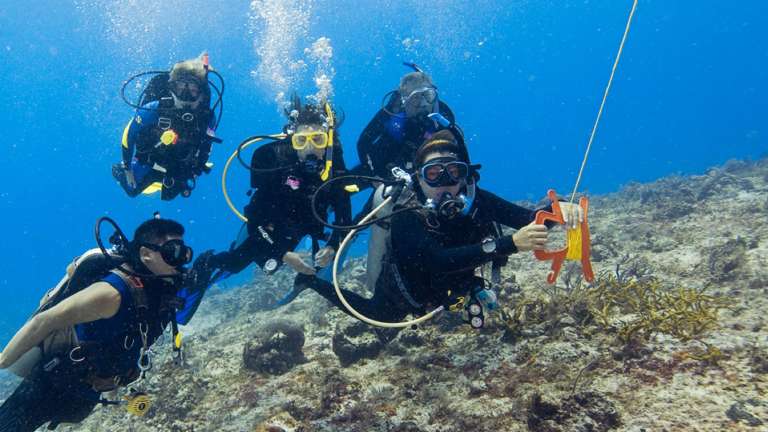
The PADI Drift Diver Specialty course introduces you to the coolest magic carpet ride you’ll ever experience. This course shows you how to enjoy rivers and ocean currents by “going with the flow,” staying with your dive partner, communicating with the dive boat and knowing where you are the whole time.

What You Learn

During your PADI Drift Diver certification course, you learn about:

  • Planning, organization, procedures, techniques, problems and hazards of drift diving
  • An introduction to drift diving equipment — floats, lines, reels
  • Buoyancy-control, navigation and communication for drift diving
  • Site selection and overview of aquatic currents – causes and effects
  • Techniques for staying close to a buddy or together as a group

Contact Us For More Information!

Start Your eLearning Today!

Dive Theory

Dive Theory

Dive Theory Online takes you step-by-step through dive physics, physiology, skills, equipment and environment.  This course is a great way to learn more in-depth knowledge behind the science of SCUBA diving.  If becoming a PADI Pro is within your sites, you can get credit for half of the Divemaster Final Exam by successfully completing Dive Theory Online.

What You Learn

The course is designed for anyone who is interested and wants to improve their dive theory knowledge.  The course consists of six easy to learn sections:

  • Physics
  • Physiology
  • Equipment
  • Environment
  • Dive skills
  • The Recreational Dive Planner

Contact Us For More Information!

Start Your eLearning Today!   (you will be redirected to PADI eLearning)

Underwater Photography

Underwater Photography

Underwater photography is one of the most popular diving specialties, and the rise of sport and action cameras with video and photo capabilities has made it easier and more fun than ever. The PADI Digital Underwater Imagery course gets you going quickly, whether you use a point-and-shoot snap camera, GoPro or a sophisticated D-SLR like the pros.

What You Learn

  • How to choose the right underwater camera system for you
  • The PADI SEA method for getting great shots quickly
  • The three primary principles for good underwater photos

Contact Us For More Information!

Start Your eLearning Today!   (you will be redirected to PADI eLearning)